Welcome to Industry Inversion, a student-led newsletter run by the Themed Rides Industry Leaders of Louisville (THRILL@UofL). Students with THRILL at the University of Louisville contribute articles on industry events, announcements, park reviews, engineering deep dives, and more. THRILL is a nonprofit Registered Student Organization at the University of Louisville focused on the amusement industry, roller coasters, engineering, and everything in between.
Introduction by Gracie Egner, Freshman, Mechanical Engineering
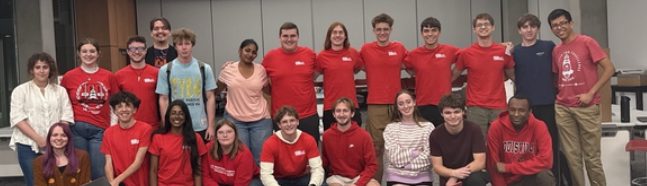
This month, THRILL brought the world of roller coasters to the Ville! At this event, passionate members of THRILL presented on a wide range of roller coaster topics. THRILL collaborated on this event with the J.B. Speed School of Engineering, using its new Engineering Student Success & Research Building (ESSRB), and with the University of Louisville Honors Program, which generously provided free food for all presenters and attendees.
This event was THRILL's biggest to date, with over 100 students, from the Speed School and across other majors, attending to learn more about roller coasters. Here is what our presenters shared.
THRILL's CoasterVille presenters
History of Roller Coasters
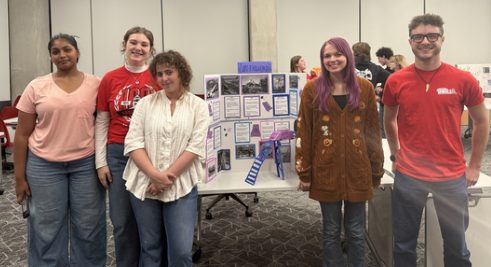
Presented by Gracie Egner, Mason Dunwoody, Sofia Brumm, Tessa Blain, and Vaishnavi Sai Bommalata · Written by Gracie Egner
Our presentation covered the basic history of roller coasters, beginning with ice slides in 17th-century Russia and continuing all the way to modern-day roller coasters. Along the way, improvements in construction, like using steel to make for a smoother ride, have helped bring roller coasters to where they are today.
Additionally, we discussed how computer-aided design (CAD) and other modern engineering tools have streamlined the process of designing roller coasters. These technologies have made other improvements, such as new forms of launch systems, easier to design and develop. Our presentation's purpose was to shed light on the eventful history of roller coasters and to explore the major milestones that have changed the roller coaster industry.
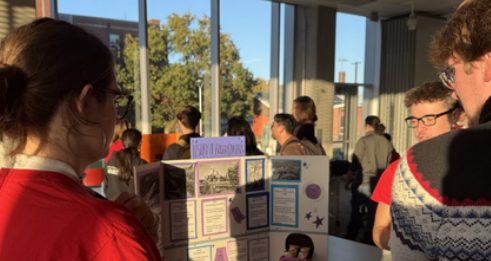
The History of Roller Coasters teamAttendees visiting the CoasterVille booths
Disney World Operations
Presented and written by Lola Gerlach
When Walt Disney was laying the foundation for Disneyland in the '50s, critics thought he was crazy to think his cartoon theme park would get anywhere. Now, the Disney theme parks are the most successful in the industry, fulfilling Disney's vision of becoming the blueprint for amusement parks of the future.
Still, a lot goes into making sure "The Happiest Place on Earth" runs smoothly. Workers of all kinds of backgrounds are needed: cast members to interact with guests, Imagineers to create the attractions and keep everything safe, ride operators, food and merchandise staff, and so much more.
Crowd control is also a huge part of the success of the Disney parks. Rides and experiences that can hold lots of riders, along with long waits for certain rides, are used strategically to manage crowds. Experiences like the Monsters, Inc. Laugh Floor can hold lots of guests, making the walkways near the attraction easier to navigate.
Lastly, you need fun attractions to keep guests coming back. Rise of the Resistance, for example, is a fan favorite, and also happens to have the most concrete poured for a Disney ride, AND is a trackless thrill ride, giving riders a smoother experience.
Launch Coasters
Presented and written by AJ Wyckoff
Launch coasters are some of the most exciting and gut-punching roller coasters out there. They date back to 1977, when The Screamin' Demon and King Kobra opened at Kings Island and Kings Dominion, and they have evolved so much over the years.
From a simple counterweight to the power of the hydraulic launch in the early 2000s to today's standard LSM launch, launch coasters keep improving, and engineers at manufacturers around the world still look to develop launches that take guests' breath away every year!
Seasonal Haunt Events
Presented and written by Ellie Rue
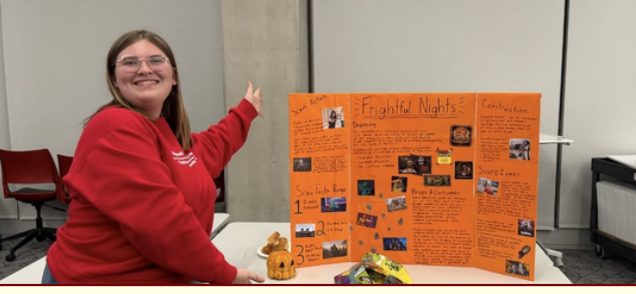
During CoasterVille, I hosted a booth about seasonal theme park haunt events such as Universal Studios' Halloween Horror Nights, Six Flags' Fright Fest, and Hersheypark's Dark Nights. These events start in late August or mid-September and run until early November. At the center of these events are several haunted houses and scare zones, each with its own theming. Theming is often based on pop culture horror icons, common fears and phobias, or folklore monsters.
One of my favorite topics to share with CoasterVille attendees was the art of scare acting and the considerations designers and engineers take to keep scare actors safe. Anyone can audition to be a scare actor, and since actors are primarily cast based on height, body type, and experience, the audition process is very simple. I asked three volunteers from each group to tell me their name, age, and height, spin slowly to give a full view of their body type, and then state their favorite scary movie. That is a very common audition structure, even for massively popular events.
Several precautions are taken when constructing haunted houses to keep actors from getting hit by guests who can't control their fear reaction. Actors often perform scares from behind walls or screens, on top of stages, or within fenced-off areas. Actors are also usually taught to perform their jump scare very quickly and remove themselves as soon as they're finished, which can keep them from becoming the victim of a physically violent guest. These safeguards are not always foolproof, though, especially for a roaming actor in a scare zone. More effective solutions for actor safety are still developing within the industry.
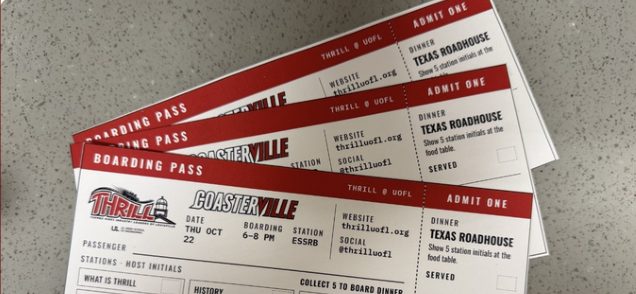
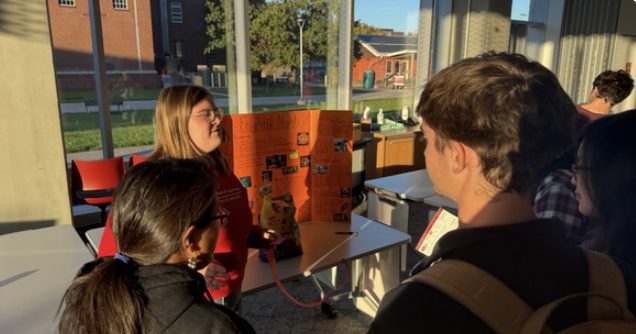
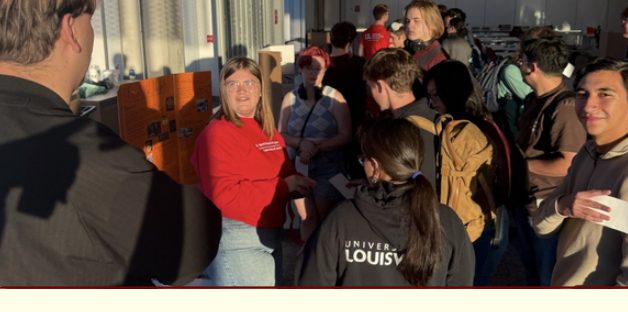
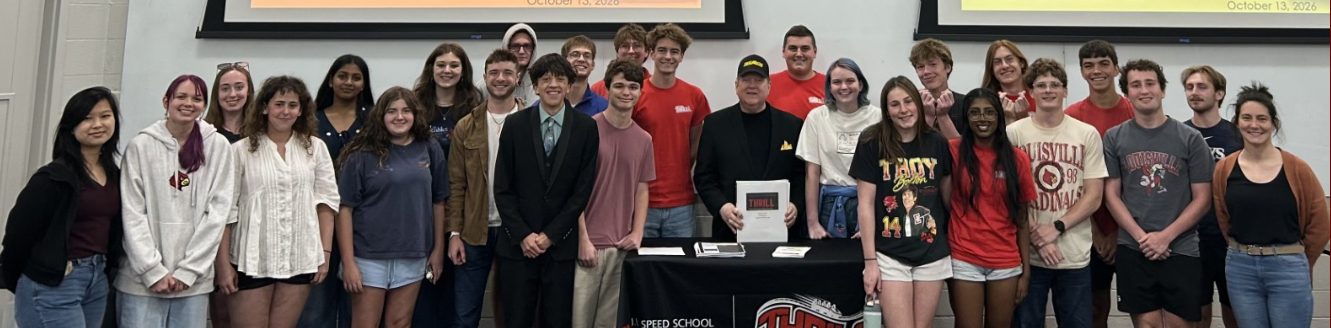
Ellie Rue at her Seasonal Haunt Events boothCoasterVille's boarding-pass ticketsAttendees at CoasterVilleA full house in the ESSRB
Roller Coaster Trains
Presented by Logan Hancock and Preston Koeninger · Written by Logan Hancock
At CoasterVille, I gave a presentation on coaster trains. It covered the different types of trains, the restraints that keep riders in their seats, and the safety mechanisms working behind the scenes. Those include ratchet and hydraulic locks, anti-rollback dogs on the lift hill, and sensors that confirm every restraint is locked before a train can leave the station. It was a lot of fun showing people just how many layers of protection go into a roller coaster, especially with all of the recent horrific events in the news.
That mattered to me because incidents at theme parks are actually really rare, and I wanted people to leave understanding that. When you see how many backups exist for the backups, it's a lot easier to feel safe on a ride. This topic was extremely important to me because I love roller coasters so much. These machines are built for riders' enjoyment, and I hate the idea that anyone would feel unsafe on them.
Sculpting the Future of the Ride Engineering Competition
Written by Sofia Brumm, Freshman, Middle/Secondary Education (History Track)
Architects are well known for making beautifully meticulous models of their buildings and the spaces around them, often with makeshift materials (in the case of architecture students) like cardboard, paper, Styrofoam, and much more. On the THRILL Theming Team, we take heavy inspiration from this. By looking at the architectural models people have made, we can figure out what materials to use for the landscape and environment around the coaster. We have been making models of trees with clay, and we just began making leaves with Styrofoam. Models make the product (in this case, the coaster) feel cohesive with its environment and offer context and atmosphere.
We are doing this in THRILL by making our environment inspired by a local urban legend, the Pope Lick Monster. The environment will seem normal at first, then grow progressively more unsettling and immersive in the story, starting with the gas station. It may seem normal at first, but soon riders will see missing posters and feel the environment turn eerie. Like in architecture, we are taking heavy inspiration from the real Pope Lick site: the gas station, the creek, the bridge. We are learning from the architecture around Louisville and hope to create a theme around the coaster that does the site and story justice.
Speaking with Speigel: An Expert in the Field
Written by Gracie Egner, Freshman, Mechanical Engineering
This month, THRILL had the honor of hosting guest speaker Dennis Speigel. As the founder and CEO of International Theme Park Services (ITPS), Dennis has spent more than 50 years impacting the attractions industry for the better. His career began at just 13 years old as a ticket taker at Coney Island in Cincinnati, Ohio, and eventually grew into a leadership role in the development and management of theme parks around the world.
In 1983, Speigel founded the consulting firm ITPS. Over his career, he has worked on more than 500 projects in over 55 countries and has contributed to the development and success of numerous attractions, including Kings Island and Kings Dominion. He has also served as chairman of the International Association of Amusement Parks and Attractions (IAAPA), one of the leading organizations in the global attractions industry. In recognition of his contributions, Speigel was inducted into the IAAPA Hall of Fame in 2022.
The best place to get started is simply wherever you can.
During his visit, THRILL members heard about Speigel's extensive industry experience and learned more about how to build a career in the theme park industry. He advised that the best place to get started is simply wherever you can, noting that something as small as taking tickets, like he did, could be the start of a successful career in this industry.
We are incredibly grateful to Dennis Speigel for taking the time to speak with THRILL and share his knowledge with our members. His experiences offered us insight into how everything within a theme park, from the hospitality to the rides themselves, is intertwined and works together to create the experience guests have when they visit. From all the members of THRILL, thank you, Dennis, for being part of our journey as a student organization and for showing our members a real industry leader who continues to shape the entertainment industry today!
THRILL members with Dennis Speigel
THRILL Member Spotlight
Written by AJ Wyckoff, Freshman, Mechanical Engineering
My name is AJ Wyckoff, and I am vice president of THRILL. My love for the industry dates back to 2018, when I went to Kings Island with my family and they took me on Mystic Timbers. The rest is history. I spent the rest of that summer researching as many theme parks as I could, and I could not get enough of them.
Three years later, I got to go to Cedar Point with my family, and from that day on I knew the combination of my love for math and roller coasters destined me to pursue mechanical engineering, which led me to the University of Louisville. I met Preston at Leadership Advantage, a pre-semester summer camp for incoming Speed School freshmen, and he introduced the idea that would eventually become THRILL.
The best thing about THRILL is that it is such a young RSO, which means the precedent hasn't been set. All officers and members of THRILL can be as ambitious as we please because we are paving our own tracks for this club, and the sky's the limit.
My plans and goals for THRILL are to expand beyond just the engineering side. Right now, most of our members are engineers, which is fantastic, but there's so much more to the industry. There's marketing, sales, and management, and I believe there are students on campus who would benefit from and love being part of those aspects of the industry.
October in Review: What Comes Next?
Written by Gracie Egner, Freshman, Mechanical Engineering
As October ends, THRILL looks back on a wonderful third month of the fall semester.
This month, THRILL hosted guest speaker Dennis Speigel. From Speigel, members of THRILL learned about the details of the roller coaster and theme park industry, along with his own experiences across his extensive career.
Additionally, THRILL hosted its CoasterVille event in the new Engineering Student Success and Research Building (ESSRB). With over 100 UofL students attending, THRILL was able to educate the student body on how roller coasters work, the progress that has been made throughout history, and much more!